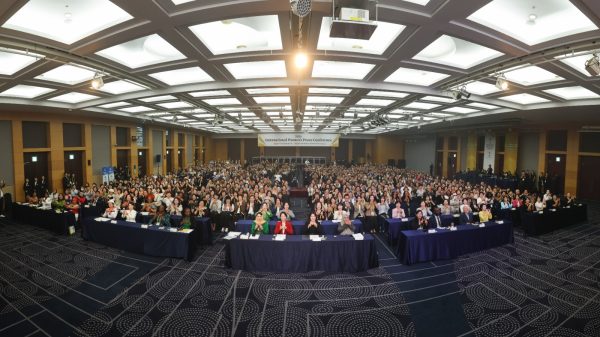
The “2026 International Women’s Peace Conference,” held under the theme “Peace in Everyday Life, Women’s Power: Rebuilding Global Governance,” concluded with a call to incorporate women’s experiences in promoting peace into policymaking and global governance.
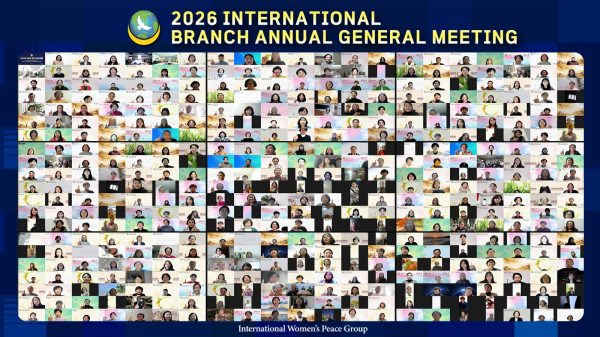
The two-day conference was organised by the International Women’s Peace Group (IWPG) on September 17 and 18 at the Enford Hotel in Cheongju, South Korea. Around 800 women leaders from 31 countries, including former and incumbent ministers, local government leaders, diplomats, officials of international organisations, women’s rights activists, academics and journalists, participated in person and online.
The conference discussed practical frameworks for incorporating women’s experiences of promoting peace in their everyday lives into public policy, institutional structures and the principles of multilateral diplomacy.
At the conference, IWPG signed memorandums of understanding (MoUs) with 12 institutions and organisations from eight countries with the aim of promoting peace and empowering women. The Ambato City Hall of Ecuador was among the signatories.
Under the agreements, plans were adopted to implement sustainable peace initiatives and various regional programmes in cooperation with local governments, educational institutions and civil society organisations.
The conference also unveiled the 2026 Global Women’s Peace Recommendations, formulated on the basis of opinions gathered in July from around 1,070 women leaders from various sectors in 46 countries.
The recommendations emphasised ensuring women’s effective power in decision-making, establishing institutional security mechanisms—including medical, legal and psychological support—to maintain peace in everyday life, promoting peace education for future generations, and strengthening regional and international solidarity.
The recommendations are planned to be presented as policy guidance to key multilateral institutions, including the United Nations Commission on the Status of Women (CSW) and the African Union.
At the main session of the conference, women leaders working on the frontlines of conflict and social inequality shared their experiences.
Fawzia Koofi, Afghanistan’s first female deputy speaker of parliament and president of the Afghan Women’s Coalition, said that peace cannot be achieved simply by ending the use of weapons; no security system can be sustainable without women’s social and political participation.
She said women must not be confined to the role of victims of conflict. Rather, their active participation must be ensured in all formal discussions on national security, the economy and the political structures of the state.
Diana Guadalupe Caiza, mayor of Ambato, Ecuador, and the first Indigenous woman to become mayor in the city’s 205-year history, said women already possess the necessary capabilities; what they need are opportunities for education, security and participation in fair policymaking processes.
She shared her experience of integrating the Andean philosophy of “Ayni,” based on service and mutual cooperation, into local administration.
Ahed Mohammed Salem Gassous, Yemen’s deputy minister for local administration and women’s affairs, said that the way women protected their own lives and livelihoods, as well as those of local communities, even amid civil war should be recognised as valuable knowledge in the reconstruction process.
She stressed the importance of institutional empowerment of women at every stage of post-conflict reconstruction and governance.
The conference’s side sessions discussed issues including peace in the age of artificial intelligence, peace education and women’s leadership, future generations and peace, and civil society and peace. The sessions were held in cooperation with partner organisations from various countries.
For the first time, the conference also featured an Academic Networking Session, where participants discussed various strategies for institutionalising peace education in educational institutions.
The experience of the Peace Committee of the Autonomous University of Tabasco Juárez (UJAT) in Mexico, including the formation of a peace committee and the development of trained peace instructors, was also presented at the session.
IWPG said that its Peace Committees, which have been operating for the past 10 years, will now be transformed into self-reliant grassroots organisations known as “Peace Chapters.” At the same time, the existing Peace Committees are being developed into policy advisory bodies comprising experts from various fields.
In her address, Na-yeon Jeon, president of IWPG, said discussions on peace generally focus on negotiations between states, meetings of international organisations, or major policy and institutional initiatives.
“But the practice of peace begins in people’s everyday lives long before reaching those platforms,” she said.
She said women’s experiences must be shared, their significance understood, and the lessons derived from those experiences transformed into collective knowledge.
“Global governance truly begins when that knowledge contributes to policymaking, decision-making and discussions within the international community,” she said.
Choi Kyung-nam, secretary-general of IWPG, said it was not enough simply to listen to women’s experiences; those experiences must be transformed into knowledge, knowledge into action, and action into social and institutional change.
He said IWPG would continue working to connect the experiences and voices of women around the world, help develop their peace leadership, and ensure that their perspectives are reflected in broader policymaking and international discussions.
An international woman leader attending the conference said she had developed deep connections with women peace activists from different countries around the world and found strong partners through mutual solidarity.
She also observed that women’s small, everyday actions and their presence themselves could serve as a powerful starting point for building peace.
IWPG is an international women’s peace NGO based in South Korea. The organisation is registered with the United Nations Economic and Social Council (ECOSOC) and the UN Department of Global Communications (DGC).
Through 105 branches and around 900 partner organisations worldwide, IWPG conducts various activities, including peace education, the promotion of a culture of peace, and the development of peace policy proposals concerning women.