The Bangladesh Bank on Sunday withdrew the minimum deposit rate for banks and allowed lending rate on consumers’ credit up to 12 per cent in its monetary policy announced for the second half of financial year 2022-23.
Earlier, the minimum deposit rate was the average of three months’ inflation rate, and the consumer credit refers to personal loan, and loan on car, real estate, education, etc.
The BB in its cautiously accommodative MPS also raised its policy rate by 25 basis points to contain inflationary and exchange rate pressure.
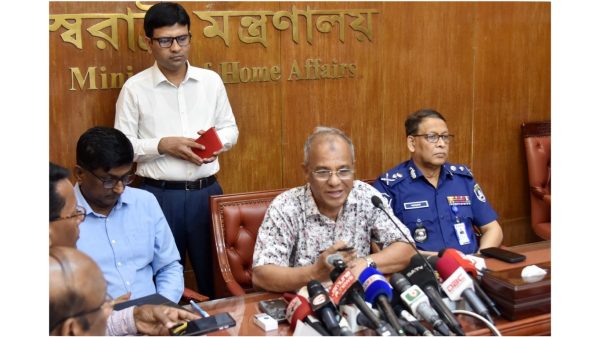
The central bank unveiled the monetary policy statement for the January-June period at a press conference held in its head office in the capital.
Considering a suitable economic condition, the nine per cent lending rate cap will be removed, according to the statement.
The relaxation of the lending rate and the removal of the deposit rate may help grow the overall deposit rate, it said.
In April 2020, the central bank imposed the lending rate cap at 9 per cent. It also levied the minimum deposit rate in August 2021.
The overall inflation soared to 9.52 per cent in August, the highest in a decade, which dropped to 9.1 per cent in September, 8.91 per cent in October, 8.85 per cent in November and 8.71 in December 2022.
In the latest MPS, the repo rate at which the central bank of a country lends money to commercial banks was raised to 6 per cent from 5.75 per cent, reverse repo rate to 4.25 per cent from 4 per cent and special repo rate to 9 per cent from 8.75 per cent on the day.
The Bangladesh Bank, however, increased domestic credit growth target to 18.5 per cent while the private sector credit growth target was kept unchanged at 14.1 per cent.
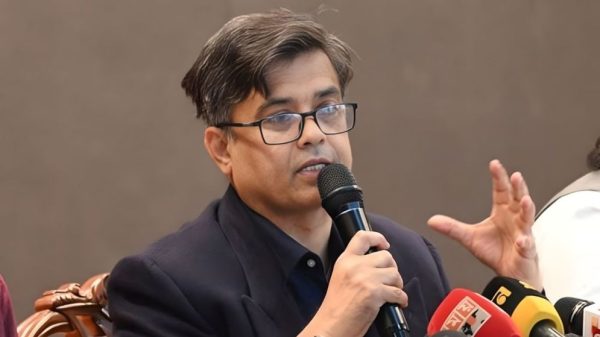
M Masrur Reaz, chairman, Policy Exchange of Bangladesh, told New Age that there were some measures in the MPS to contain inflation, but those were not enough to minimise overall inflation in the country.
The withdrawal of deposit rate ceiling and raising policy rate are welcoming steps for reducing inflation, but expanding domestic credit growth target and keeping lending rate cap are confusing, he said.
Reaz said that the central bank should have tightened credit growth and lifted lending rate limit in a bid to fight inflation.
Policy Research Institute of Bangladesh executive director Ahsan H Mansur said that the BB’s credit expansion could worse inflationary pressure after six months approximately.
The MPS would not be effective if the BB kept the lending rate cap unchanged, and the decision not to withdraw lending rate cap would create more pressure on exchange rate, he pointed out.
He also expressed concern about the rising non-performing loans as no effective measure was taken to rein in the surging NPL.
The central bank sold over $12 billion directly to banks from January to December amid a shortage of the greenbacks on the market.
The dollar sales withdrew an equivalent amount of local currency from banks that weighed heavily on liquidity in the banking sector.
Due to the dollar sales, foreign exchange reserves dropped to $32.52 billion on January 12, 2023 from a record $48.6 billion in August 2021.
The BB in its policy statement said that Bangladesh was facing inflationary, liquidity, and exchange rate pressures over the past few months, mainly due to external shocks.
To overcome these challenges, the central bank has already taken various policy initiatives, which include raising the policy interest rate and continuing the repo and liquidity support facilities for banks and Non-Bank Financial Institutions.
It discouraged imports of luxury and non-essential commodities, enhanced facilities to improve export receipts and inward remittances, and engaged with commercial banks and NBFIs to deal with non-performing loans and good governance issues.
‘The BB’s monetary and credit programmes for January to June will pursue a cautiously accommodative policy stance to contain inflationary and exchange rate pressure, support desired economic growth, ensuring necessary flow of funds to the economy’s productive and employment generating activities,’ according to the statement.
Due to huge liquidity withdrawal from the banks, the liquidity condition in the money market is already very tight, reflected by sharply rising call money rates, the BB said.
It emphasises raising production and creating employment opportunities by providing necessary funds to various productive sectors of the economy.
The central bank’s monetary policy also seeks to promote import-substituting economic activities and dissuade imports of non-essential commodities to reduce the exchange rate pressure, protect foreign exchange reserves, and control imported inflation.
The near-term economic outlook seems quite stable, critically depending on three external issues that included the length and intensity of the Russia-Ukraine war, the spree of interest hikes by the Fed and the reemergence of the Covid-19 situation and its severity in China.
The downward trend in global energy prices might remain unresponsive to domestic inflation mainly because of administered energy prices in the country, the statement said, adding that in this regard, the periodic fuel price adjustment in line with the global price was essential.
The continuation of rising trends towards long-term interest rates in advanced economies may create some pressures on interest and exchange rates in the emerging market and developing economies, it said.
The Bangladesh Bank is taking necessary measures to gradually move towards a market-based, flexible, and unified exchange rate regime (within a 2.00 per cent variation) by the end of this financial year.